

A feeding trial carried out in the Philippines evaluated the efficacy of Clarity-Q® supplementation in pullets by assessing health and performance parameters. Four dosage levels (0, 125, 250 and 500 g/ton, Table 1) of Clarity-Q® were tested for body weight, flock uniformity, liveability, nutrient digestibility, and immune response in pullets from 0-15 weeks of age.
The results showed significant improvements in overall performance (Table 2) and immune response in pullets supplemented with Clarity-Q® at 250 g/ton throughout the study period (Table 3). Additionally, improved digestibility of nutrients was also observed at the same dosage of Clarity-Q® (Table 4).

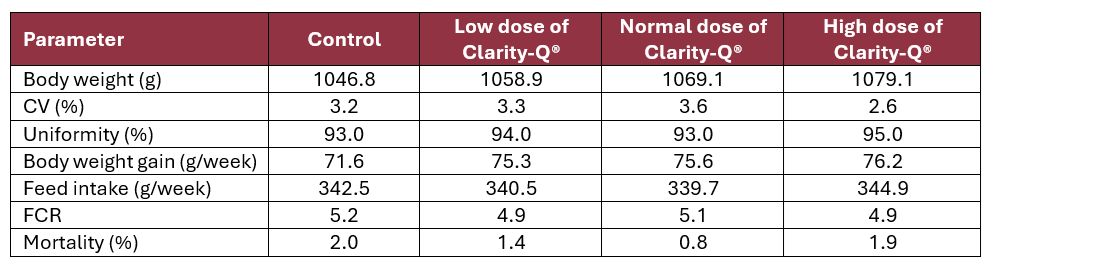


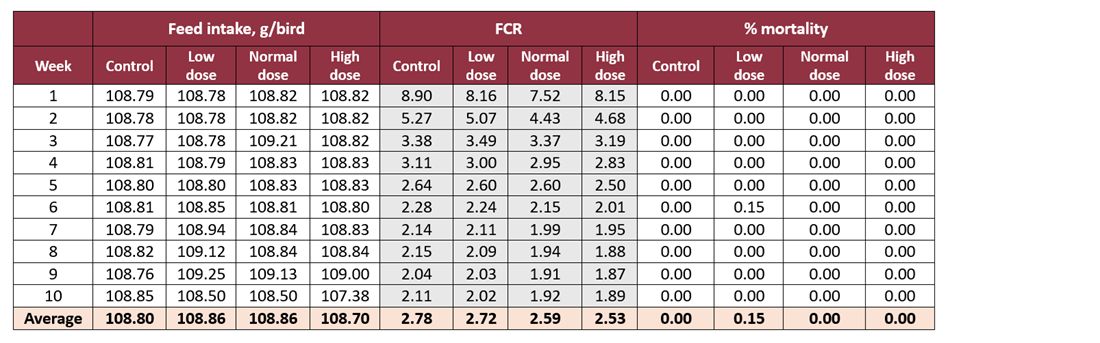
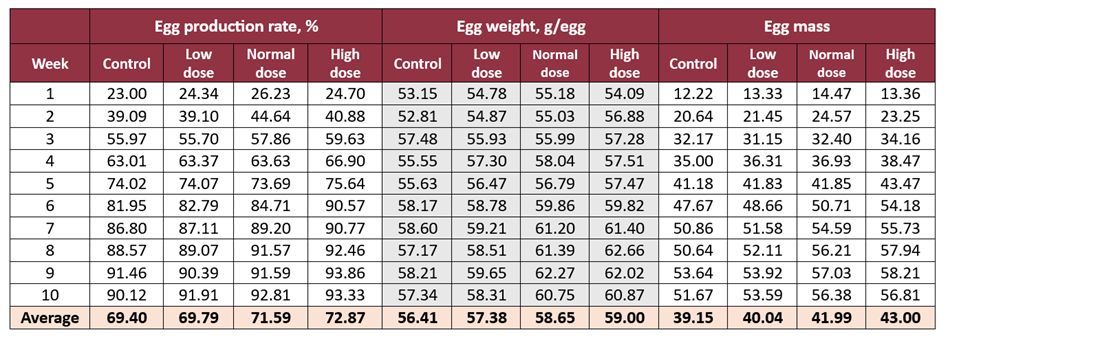
This trial was continued into the laying period where diets were supplemented with the same dose rates in the same four treatment groups. Key performance parameters were gathered from 20-week-old laying hens over a ten-week period. Egg production rate, egg weight, egg mass and feed efficiency were all significantly improved with Clarity-Q® supplementation (Tables 5 and 6).
A significant (p < 0.001) increase in average egg production rate (64.40%, 69.79%, 71.59% and 72.87%) and egg weight (56.41 g, 57.38 g, 58.65 g and 59.00 g) were observed with increasing levels of Clarity-Q® supplementation at 0, 125, 250 and 500 g/ton, respectively. The same significant (p < 0.001) improvement was reflected in egg mass (39.15, 40.04, 41.99 and 43.00 g) and feed efficiency (2.78, 2.72, 2.59 and 2.53) in laying hens fed diets supplemented with increasing doses of Clarity-Q® (0, 125, 250 and 500 g/ton, respectively).
An economic analysis was performed in terms of return on investment (ROI, Table 7). The dosage rate of 250 g/ton showed the highest ROI (6.7) compared with the 125 and 500 g/ton dose rates which had ROIs of 2.6 and 6.1, respectively. These calculations also considered the cost of supplementation in the rearing stage.
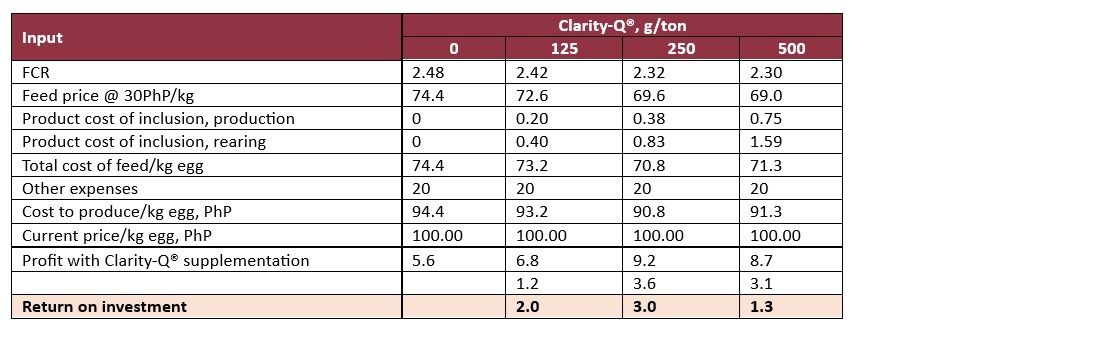
In conclusion, this trial clearly demonstrates the performance and economic advantage of supplementing Clarity-Q® to layer feeds in both the rearing and production phases.

