

Responsible use of medicines administered in drinking water and in feed for pigs results in sustainable health management and safeguards long-term efficacy. This antimicrobial stewardship ensures sufficiently high concentrations of the active substance(s) are achieved in the target tissues. The clinical outcome of any treatment is largely determined by accurate dose calculation, suitable product formulation, and correct administration.
Correct dose calculation
The daily dose of any veterinary product needs to provide an adequate concentration of the active compound in the blood or at the site of infection for effective treatment.
Correct dosing in pig production begins with an accurate assessment of the animals' mean bodyweight and daily water or feed intake.
Daily water and feed intake is highly variable and depends on several factors including;
- age
- environmental temperature
- clinical condition (fever / diarrhoea)
- product phase (gestation / lactation)
Water intake is determined by factors such as water quality and temperature, while feed composition, presentation and availability all impact feed intake. Therefore, dosing veterinary products based simply on fixed amounts per 1000 L of drinking water or tonne of feed is likely to result in under-or overdosing.
Underdosing may mean the treatment is less effective, leading to longer or higher frequency treatment periods. This increases the risk of antimicrobial resistance developing as the antimicrobial concentration at the infection site may fall below the level needed to effectively kill or inhibit the target bacteria.
The exposure may be insufficient relative to the organism's minimum inhibitory concentration (MIC). A low or fluctuating antimicrobial concentration creates selection pressure. More susceptible bacteria are preferentially eliminated or suppressed, whereas bacteria with resistance mechanisms are more likely to survive. Repeated or prolonged inadequate exposure can therefore increase the proportion and persistence of resistant bacteria.
Overdosing, on the other hand, increases treatment cost without necessarily improving the clinical outcome. This can increase the risk of drug toxicity, contaminate the environment and disturb beneficial bacterial populations in the gastrointestinal tract. Withdrawal periods are established based on the authorised dosing regimen, so exceeding the prescribed dose should not be assumed to have the same withdrawal period.
The exact inclusion level of a product in water and feed can be calculated based on the following parameters:
- Mean bodyweight
- Daily water or feed intake
- Daily dose of the active substance(s)
- Concentration of the active substance(s)
Several parameters can be calculated with the easy-to-use Huvepharma Dose Calculator app:
- Accurate inclusion rates based on pre-defined standard values or case-specific values entered manually to ensure the most accurate dosing.
- The total amount of a veterinary product required for treatment, either daily or for several days.
As well as an accurate dose, product formulation and administration largely determine the final clinical outcome of an installed treatment.
Water medication
Average daily water intake as recorded by a water flow meter over the days preceding medication can be used to estimate the expected water consumption during the subsequent 24-hour treatment period.
Homogenous distribution of the veterinary product in the drinking water system is required to ensure correct dosing, especially in highly concentrated stock mixtures.
However, some molecules demonstrate poor solubility in these proportioners and are less suitable when using standard formulations. Sedimentation and crystallisation of active substances in proportioners reduce the final concentration in the drinking water at nipple level and, subsequently, in the target tissues. This issue can be overcome by nanonisation.

Nanonisation is a unique formulation technology which substantially reduces particle size to the nanometre range (Figure 1). The smaller the particle size, the better the solubility. Following nanonisation, excellent homogeneity of the active substances in the stock mixture is observed for 24 hours, resulting in correct dosing. Huvepharma applies nanonisation technology to several molecules such as trimethoprim (HydroTrim®; sulfadiazine/trimethoprim), fenbendazole (Pigfen® Oral suspension) and florfenicol (Amphen® Oral suspension).
Correct administration in drinking water
Medicated drinking water should be the sole source of drinking water for the duration of the treatment. Its palatability is crucial to maintaining daily water intake and to ensure correct dosing. Liquid formulations should be shaken before administration. Stirring at the bottom of the stock container immediately after product administration contributes to good farming practice.
Some physiochemical parameters such as the pH of the drinking water can have a substantial impact on both the solubility and stability of the active compounds. For example, tetracyclines have a strong tendency to bind metal ions such as iron and magnesium, forming poorly soluble chelates. Products should remain physically and chemically stable during the complete treatment period. Biocides such as hydrogen peroxide and sodium hypochlorite in the drinking water may reduce the stability of the active compounds.
Incompatibilities can be observed when combining different products in the same stock container. Drinking water systems can house biofilms which may impact active substances. Proper cleaning and regular disinfection of water lines will avoid the intake of sub-therapeutic doses, reducing the risk of antimicrobial resistance development. It is advisable to flush pipes with drinking water before each treatment to remove as much of the biofilm as possible.
Feed medication
Administration of medicines via feed guarantees therapy adherence. However, this administration route is less flexible than medicating drinking water and is therefore not recommended as the sole treatment method in acute disease outbreaks.
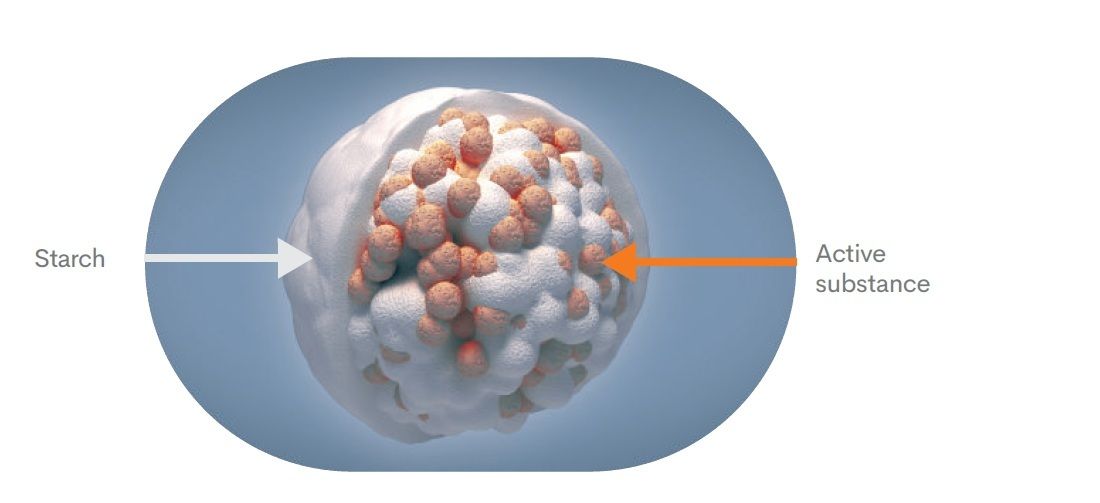
Homogenous distribution of active substances is also important for medicated feed. Standard powder premix formulations comprise physically dissimilar, fine particles, which tend to segregate during production, handling and storage. This may lead to carry-over to the next feed batch. The high temperature and pressure generated during pelletisation can negatively affect premix stability. Alternatively, microgranulated premixes result in superior homogeneity throughout the medicated feed by encapsulation of the active compound in equally sized and large microgranules (Figure 2), while also providing pelleting stability. Huvepharma's microgranulated premixes comprise tiamulin (Vetmulin®), tylosin (Pharmasin®), and fenbendazole (Pigfen®).
Correct administration in feed
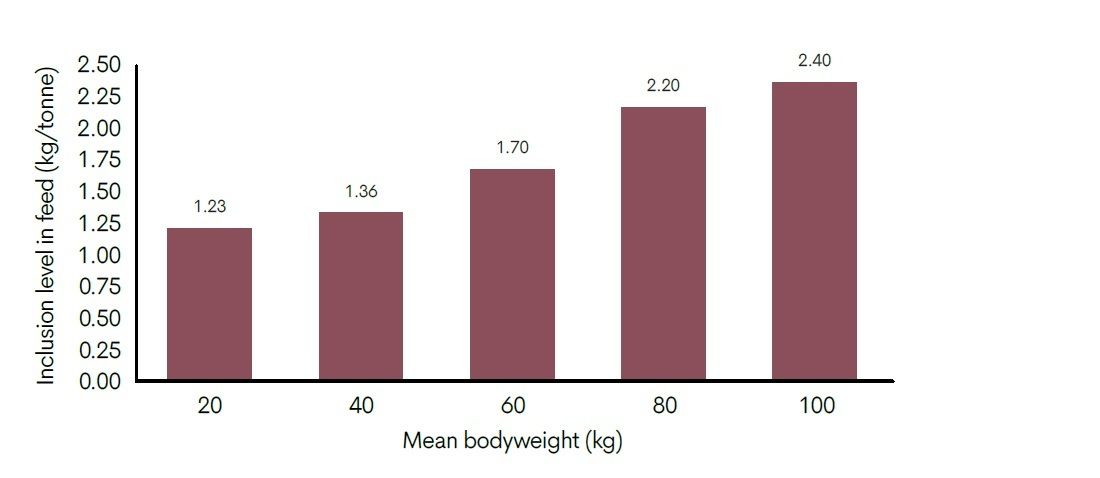
At equal daily dosages, a higher inclusion level is required in feed for weaned/fattening pigs with increasing bodyweight (BW) because of the relatively lower feed intake per kg BW (Figure 3). Logically, inclusion levels in sow feed are typically higher than in feed for weaned/fattening pigs.
To treat a sow with a BW of 240 kg at 5 mg tiamulin hydrogen fumarate per kg BW and a daily feed intake of 2.5 kg, an inclusion level of 4.8 kg tiamulin 10% premix would be needed. Furthermore, sow feed intake also largely depends on the production phase. Daily feed intake during gestation is 2-3 kg while this can vary between 1-8 kg during lactation. Care should be taken not to dilute medicated feed with larger amounts of unmedicated feed still present in the feed bin.
Conclusion
Veterinary medicines should be used responsibly when considering oral administration. Accurate dose calculation and advanced formulation technologies ensure adequate tissue concentrations of active substances are reached and support sustainable pig farming.
